
Trampoline Net Lifespan in Australia: When to Repair vs. Replace
Author: Jump Star Trampolines Date Posted:23 August 2026
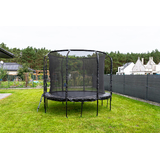

Trampoline Net Lifespan in Australia: Repair or Replace?
A safe trampoline net is not just about looks. In Aussie backyards, with strong sun, wild weather, and kids bouncing hard as the weather warms up, the net is often the only thing stopping a fall to the ground.
As spring approaches and the kids start asking for more outside time, it is worth asking one simple question: is your trampoline net still doing its job properly? We will walk through how long a trampoline net usually lasts in Australian conditions, how to spot real safety issues, and when it is fine to repair small problems versus when it is safer to replace the net completely.
Expected Trampoline Net Lifespan in Australia
Trampoline nets do not last forever, especially under Australian sun. Most nets in our conditions sit somewhere in a broad range of a few years of regular outdoor use. How long you actually get will depend a lot on quality, care, and where you live.
Different backyards put different stress on a trampoline net:
- Coastal areas: Salt air and wind can dry out fibres and wear stitching faster.
- Outback and inland: High heat and strong UV can make the net brittle more quickly.
- Suburban areas: Slightly more protection from fences, trees, and shade, but still strong sun.
You may notice age catching up with your trampoline net when you see things like:
- Faded colour compared to when it was new
- Mesh that has gone stiff, rough, or brittle to the touch
- Sagging net that does not spring back to shape
- More and more small holes or pulled threads appearing
When these signs start showing up together, it is time to look more closely at whether the net is still safe for heavy use.
UV Damage Signs You Can’t Ignore
UV is the quiet enemy of every trampoline net in Australia. The fibres weaken long before a big tear appears, so waiting until you see a huge hole is leaving it too late.
A simple at-home check a few times a year can tell you a lot. Walk around the trampoline on a bright day and look and feel for:
- Strong colour fading, especially on the sunniest side
- A powdery or chalky feel when you rub the mesh
- Mesh strands that snap easily when gently tugged
- Areas that feel thinner, crispy, or rough compared to the rest
Some UV wear is mostly cosmetic. For example, a net that is a bit faded but still soft, springy, and strong when gently pulled may still be doing its job.
But UV wear is a real safety risk when:
- The mesh snaps or tears with light pressure from your fingers
- You see several thin, washed-out patches that feel weak
- Holes start spreading out from a faded area
When the net feels dry, brittle, or weak in more than one spot, it usually points to deeper fibre damage, not just surface ageing. In that case, replacing the net is the safer choice.
Checking Stitching, Zips and Entry Points
Even if the mesh looks fine, the stitching and entry points work hard every day. Kids lean on the doorway, hang on the zip, and push at the seams, and those small stress spots can give way first.
Pay close attention to:
- Seams at the top and bottom of the net where it connects to poles or the mat
- Stitching around any buckle points or tie-downs
- The zip track, slider, and any clips used to secure the entry
Problems you might see include:
- Frayed or missing stitching, so you can see gaps along the seam
- Seams starting to separate or pull away from the mesh
- A zip that will not close fully or pops open under pressure
Some small things can sometimes be repaired, for example:
- A short line of loose stitching in a low-stress area
- A zip slider that has worn out but the teeth are still straight and clean
However, replacement is usually the safer path when:
- Long seams are opening up or the net is pulling away from the poles
- The entry cannot fully close and stay closed under normal jumping
- There are multiple weak points around the enclosure, not just one small spot
If the enclosure cannot form a full circle of protection, the risk of falling out goes up quickly.
Pole Padding, Caps and Frame Contact Wear
The net is only one part of the safety system. Pole padding and caps play a big part in protecting jumpers if they land against the sides.
Watch for:
- Padding that is split, flat, missing sections, or slipping down the pole
- Cracked or missing pole caps, leaving sharp edges or screw heads exposed
- Wear marks where the net rubs against a rough or sharp area of the frame
Worn padding can mean that even a solid net will not stop a painful hit. At the same time, hard or sharp edges can slowly cut into the mesh, shortening its lifespan and leading to tears.
Replacing just the padding and caps can be enough when:
- The net is still tight, strong, and in good condition
- Wear marks on the net are light and in one small area
- You catch the problem early before the mesh has started to tear
If you see repeated wear marks, cuts, or holes in the same spots, it often means the whole setup needs a closer look. In that case, it may be time to review the net, padding, and pole caps together instead of only swapping one piece.
Repair Vs Replace: Making the Right Call
It helps to keep a simple rule in mind: if the damage is small, contained, and not in a high-stress area, repair might be an option. If the damage affects how the net holds you in, replacement is usually safer.
Repairs might be enough when:
- There is a tiny hole away from the entrance that is not spreading
- A short seam has come loose but the rest of the net is strong
- The zip hardware, not the fabric, is the main issue
Replacement is the better choice when:
- The net sags, feels loose, or moves too much when pushed
- There are several weak spots, splits, or stretched areas
- UV damage has made the mesh brittle or flaky in more than one place
- The entry cannot be fully and reliably closed
While it can feel easier to keep patching problems, constant repairs often add up in time and worry, especially across a busy spring and summer of heavy use. A fresh, well-fitted trampoline net that is built for Australian UV and weather can give much more peace of mind when the kids are out there every day.
Seasonal Checks to Keep Your Trampoline Safe
Late August is a great time for a full safety check, before the warmer weather really kicks in. A quiet half hour now can save a lot of stress later when the trampoline becomes the main backyard attraction again.
A simple seasonal routine could include:
- Walking around the trampoline and checking the net, seams, and zip
- Gently pressing and rubbing the mesh to feel for weak or crispy spots
- Looking closely at the pole padding, caps, and any exposed metal
- Cleaning the net with mild soapy water and a soft cloth to remove dirt and grime
- Using a cover or moving the trampoline to a more shaded spot if possible
At Jump Star Trampolines, we see how much fun a backyard trampoline brings to Australian families, and we also see the common wear patterns that pop up as the years go by. Paying attention to small changes in your trampoline net now helps keep it safe, strong, and ready for those long, sunny afternoons ahead.
Give Your Trampoline A Safer, Longer-Lasting Upgrade
Keep your family bouncing safely with a quality trampoline net that fits correctly and is built to last. At Jump Star Trampolines, we back our products with practical advice so you can choose the right replacement without the guesswork. If you are unsure what you need or have questions about sizing, materials or installation, simply contact us and we will help you get set up properly.