
Installing an In Ground Trampoline Across Sloped Backyards
Author: Jump Star Trampolines Date Posted:1 February 2026
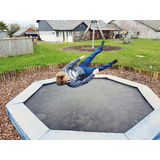

An in ground trampoline is one that sits at ground level, with the jumping mat flush with the lawn. Instead of climbing up to get on, kids and adults can walk straight onto it, which makes it feel safer for many families and easier to blend into the yard. Across Australia, especially in backyards where space is limited or kids are younger, this low-profile design has become a popular option.
But not every yard is a flat, blank canvas. In Perth, WA, many blocks come with natural slopes, whether slight or steep. That can make installation a bit more complicated. With the right plan, though, a sloped yard isn’t a deal-breaker. Here, we look at what it takes to install an in ground trampoline in uneven spaces and how to do it safely.
Understanding Slope Challenges in Backyard Spaces
Sloped yards can pose a few challenges when digging in an in ground trampoline. For starters, jumpers need a level surface underneath to get a safe and even bounce. When one side of the hole is higher than the other, the tension across the springs can shift. That throws off the feel of the trampoline and increases wear on one side.
Wet areas are another concern. If the lower end of the slope collects rainwater, it can cause pooling under the trampoline. That leads to rust, soggy soil, and even mould if left unchecked. Digging on a hill also increases the risk of the walls caving in without good support. So before we begin, we need to think through how slope, water, and soil will affect long-term use.
Planning ahead gives us a better result. It doesn’t just make for smoother bouncing. It helps keep the structure solid and lowers the chances of repairs down the track.
Site Assessment Before Installation
Before we start moving soil, we take a close look at the slope itself. Is it gradual or sharp? Does it run front to back, side to side, or at an angle? Knowing where the high and low points are helps us figure out how deep to dig and where we’ll need extra support.
We recommend using a string level or even a builder’s line with a simple spirit level attached. Small local hires sometimes offer slope readers if the drop seems tricky. In some cases, when we’re unsure or the slope is sharp, we bring in a landscape professional for a second opinion.
We don’t always need to flatten the entire yard to install an in ground trampoline. Sometimes it works better to build it into the natural rise of the yard with retaining walls on one side. That can help keep the overall shape of your garden intact, especially when space is limited.
Jump Star Trampolines offers in ground trampolines with full venting and ultra-durable three-layer frame protection, designed for Australian conditions. All models are sized for easy installation in standard yards and provide solid jumping performance even on tricky ground.
Preparing the Area for Digging
Digging into a slope means we’re not working with a uniform hole. One side may be deeper than the other by default, so we need to measure carefully. In some cases, we may need to cut into the slope on the high side and build up support on the low end to keep the trampoline level once placed.
Here are some steps we typically follow when prepping sloped ground:
1. Remove any plants, grass, or rocks from the digging area.
2. Mark out the trampoline's frame shape using string or landscape paint.
3. Measure the depth from multiple points to confirm alignment.
4. Start digging from the higher side and go across to match the level base.
5. Add support walls or pavers along the lower edge, if needed, to hold the soil back.
Wall supports help stop soil from collapsing into the trampoline cavity. These supports can be made of treated timber or blocks, depending on budget and how visible they’ll be from the yard.
Managing Water and Soil Drainage
On sloped ground, water flows downhill. So once the trampoline cavity is dug out, we look at how that water might collect. Without a drain path, water can sit in the hole, which softens soil and can cause long-term damage.
We use simple fixes like gravel bedding at the base to help water drain downward. For bigger slopes or wetter seasons, a French drain or a small trench leading away from the cavity might be worth adding.
Good drainage planning includes:
• Adding gravel under the trampoline base
• Sloping the dig slightly to guide water out
• Running a PVC pipe or garden hose under the digging area for exit flow
• Avoiding placing the trampoline in areas where water already pools
It’s much easier to manage water now than to fix waterlogged soil later or replace rusted parts before their time.
Safe Finishing Touches for Sloped Trampolines
Once the trampoline is in place and bounce-tested, we shift our focus to what’s around it. On sloped land, footing matters even more. If one side of the trampoline sits near a raised area or edge, it’s smart to soften that zone with rubber matting, bark, or synthetic turf.
We often use these safety steps to finish the area off:
• Fit the edge pads snugly so they don’t move with pressure
• Choose a safety net designed to fit in ground frames
• Create stable step-off zones with either flat pavers or turf
• Make sure walkways around the trampoline are even to avoid tripping
It’s also a good idea to sit down with the family to go over use rules. Steep drop-offs, uneven paths, or low-hanging branches can all create hidden risks. A few simple boundaries, like “no bouncing after dark” or “no flips without an adult”, keep things safe and fun.
Long-Term Play Starts with a Smart Setup
A sloped yard doesn’t rule out a great backyard trampoline. It just takes a bit more planning. By assessing the slope properly, digging carefully, and shaping the area with purpose, we set ourselves up for a trampoline that holds strong over time.
When the frame sits on solid footing and water has clear paths to drain, the trampoline stays safer and more enjoyable day after day. With a little thought during the install, an in ground trampoline can become a smooth part of the backyard, levelled, secure, and ready for all sorts of play.
Planning to install an in ground trampoline on a sloped backyard in Perth, WA, calls for a thoughtful approach to make sure it blends with your space and remains safe. With the right digging methods, drainage solutions and clear safety zones, your trampoline can fit perfectly and function at its best. At Jump Star Trampolines, we’re here to help you get started, so give us a call to discuss what will work for your yard.